Blog AI Development
AI Development Trends Reshaping Industry Operations (2026)
April 15, 2026Kaushik Patel
BlogAI Development
April 15, 2026Kaushik Patel
Summarize this blog post with:
AI isn’t something that companies are now experimenting with. It becomes something that is necessary to embed in your business in 2026. AI is changing how modern companies are operating, competing, and growing like never before. From automating complicated workflows to shaping user experience & decision-building, AI is serving everything that this emerging technological landscape demands.
AI development solutions can be embedded into the products, security & operations, and finance. The worldwide AI market was valued at around $371.71 billion in 2025. The industry plans to reach the height of $2.4 trillion by 2032 with a CAGR of 30%. Another data suggests that 52% of large enterprises have a dedicated AI adoption team.
Additionally, 67% of enterprises are now looking forward to investing in Gen AI technologies. Together, these figures indicate that AI is becoming the fastest-growing technology ever. To know the recent trends in AI development solutions, check out this blog. Read why AI development matters and how businesses can reshape themselves by embedding AI.
Artificial intelligence development services are being used by modern enterprises more and more to automate time-consuming and repetitive processes. AI reduces human labor and increases accuracy in a variety of applications, including workflow automation tools and chatbots for customer service. To increase efficiency, businesses like Microsoft are incorporating AI into routine business operations. Organizations may streamline operations, reduce human error, and concentrate more on strategic initiatives that drive growth and innovation thanks to the increasing need for automation.
By measuring a set of data, artificial intelligence development services help organizations achieve more valuable outcomes. Businesses can find patterns, trends, and insights that would otherwise be hard to spot with the use of advanced analytics tools from firms like IBM. This data-driven method enhances forecasting and lowers risks. Consequently, businesses are making decisions that improve performance, maximize resources, and boost overall productivity.
By providing individualized and responsive interactions, artificial intelligence development solutions are significantly improving customer experiences. Businesses like Amazon deploy technologies that provide seamless user journeys, quicker inquiry answers, and personalized product suggestions. Businesses can provide customized experiences that foster long-term client relationships, boost engagement, and foster loyalty by comprehending user behavior and preferences.
Artificial intelligence development solutions increase operational efficiency through workflow optimization, process automation, and a decrease in human interaction. AI can be used by businesses to monitor performance, manage supply chains, and optimize internal processes. Google's solutions enable businesses to process data more quickly and precisely. Better use of resources, fewer mistakes, and more production result from this. As a result, businesses may retain high-quality outputs with fewer resources.
By reducing manual labor and increasing process efficiency, AI implementation helps firms drastically lower operating expenses. Automation lowers labor costs and operational overhead by minimizing the requirement for manual processes. By providing scalable solutions, cloud-based AI services from Amazon Web Services help lower infrastructure expenses. Predictive analytics also helps in avoiding expensive mistakes and downtime.
By offering real-time insights and predictive analytics, AI development services speed up decision-making. Companies are able to swiftly analyze data and address changing business demands. Organizations can process massive datasets and rapidly produce meaningful insights thanks to SAP-powered tools. This speed enables businesses to maintain their agility, become more responsive, and take advantage of opportunities sooner than rivals, which improves results and boosts corporate performance.
AI enables innovation, efficiency, and improved consumer interaction, giving firms a significant competitive advantage. Early adopters of AI can outperform rivals by serving better than them. Brands like Tesla use AI development services to stay ahead and innovate. Businesses may improve decision-making, respond to market shifts, and generate distinctive value by incorporating AI into fundamental processes.

By facilitating automated content generation, quicker product innovation, and effective software development, generative AI is transforming corporate operations. Organizations are utilizing advanced models like OpenAI and Google DeepMind to generate marketing content, design prototypes, and even write code. This speeds up innovation cycles and minimizes manual labor.
AI-assisted development also helps teams uncover issues, optimize performance, and enhance efficiency. Businesses can improve innovation, expedite operations, and shorten time-to-market by utilizing AI development services. As a result, businesses may concentrate more on important projects while AI takes care of complicated and repetitive activities, increasing overall productivity and competitiveness.
AI-powered automation, one of the AI development trends, is revolutionizing how organizations manage operations by introducing intelligent technologies that can learn and adapt over time. Tools from UiPath and Automation Businesses may automate repetitive tasks with Anywhere, which lowers operational expenses and human error.
Smart workflow automation improves process efficiency by analyzing data & building smart corrections. This results in improved resource utilization and quicker task execution. By embracing artificial intelligence development services, firms may construct intelligent workflows that optimize operations, boost productivity, and empower teams to focus on high-value tasks, ultimately enhancing overall business performance.
Businesses are operating more effectively thanks to AI agents and autonomous systems that carry out tasks with little assistance from humans. Microsoft products, like virtual assistants and AI copilots, are increasing departmental efficiency. These systems are capable of handling inquiries, automating client contacts, and assisting in decision-making.
By evaluating data and offering useful insights, autonomous systems also contribute significantly to operations and sales. AI agents are being used by companies that invest in AI development services to improve customer experiences, decrease operational workload, and increase responsiveness, resulting in more flexible and scalable corporate settings.
This popular AI trend is supporting firms in making decisions easily. Edge computing solutions that provide real-time analytics at the device level are being developed by companies such as NVIDIA. In IoT contexts, where prompt responses are essential, this is extremely helpful.
Edge AI reduces latency and boosts system performance by lowering dependency on centralized cloud services. Organizations adopting artificial intelligence development services can get quick operational insights, enhance responsiveness, and improve overall efficiency. It is particularly helpful in industries that demand insightful data for decision-making.
By examining past and present data, predictive analytics assists companies in anticipating future trends and making wise decisions. Organizations can estimate demand, detect risks, and optimize maintenance schedules with IBM platforms. This lessens unforeseen disruptions and increases operating efficiency.
Predictive models can be used by companies that use artificial intelligence development services to improve business intelligence and support proactive tactics. Businesses may increase consumer satisfaction, optimize processes, and obtain a competitive edge in quickly evolving industries by utilizing this information.
Also read :- Top AI development company in UK delivering scalable AI solutions
Multimodal AI creates more intelligent and interactive systems by integrating many kinds of data, including text, graphics, and voice. Better comprehension and contextual answers are made possible by advances in AI capabilities brought forward by Meta and OpenAI. By offering more organic and intuitive interactions, these technologies improve user experiences.
Companies that use AI development services can create apps that offer advanced automation and customized experiences. This results in better decision-making, increased involvement, and more effective operations across a variety of businesses.
Cybersecurity solutions driven by AI are making it easier for companies to identify and stop threats. Companies like Palo Alto Networks employ AI to analyze massive quantities of data and identify potential threats in real time. This lessens the impact of cyberattacks by enabling smart error monitoring & response.
Automated security solutions also help monitor networks continually, assuring data safety and compliance. In an increasingly digital world, businesses can fortify their security architecture, safeguard sensitive data, and uphold client confidence by utilizing artificial intelligence development services.
The goal of responsible AI is to guarantee that AI systems are impartial, open, and compliant with moral principles. Guidelines for ethical AI development, including bias reduction and data privacy, are promoted by organizations like the OECD.
Companies that use artificial intelligence development services are putting governance frameworks in place to guarantee responsibility and compliance. While lowering risks, ethical AI practices help in fostering trust. Businesses may achieve sustainable innovation and develop technologies that benefit society while upholding openness and fairness in their operations by giving responsible AI top priority.
AI is revolutionizing the healthcare sector by facilitating more intelligent diagnoses, better patient care, and increased operational effectiveness. AI-powered predictive diagnostics examine imaging, medical history, and patient data to identify illnesses early on, assisting physicians in making prompt and accurate judgments. Advanced diagnostics and clinical decision-making are already supported by technologies created by companies like IBM and Google Health.
Another significant use case is patient automation, where AI-driven technologies simplify administrative operations, patient monitoring, and appointment scheduling. Chatbots help to respond to patient inquiries, lessening the workload for medical personnel. By measuring clinical metrics, AI also facilitates individualized treatment strategies. Medical providers can drive patient outcomes and decrease errors by utilizing AI development services. Healthcare systems that prioritize accuracy, accessibility, and improved patient experiences are becoming more proactive and data-driven thanks to AI.
AI is revolutionizing the industrial business by providing intelligent solutions that boost productivity, reduce downtime, and optimize operations. One of the most significant uses of AI is predictive maintenance, which uses machine data analysis to anticipate equipment faults before they happen. Top manufacturing businesses use AI to improve asset performance and minimize maintenance costs.
Smart production is another significant use case, where AI-driven solutions monitor production lines, optimize workflows, and maintain quality control. By automatically modifying procedures in response to real-time data, these systems can reduce waste and boost productivity. Robotics combined with AI enables automation of repetitive activities, increasing speed and precision. Companies may create smart factories that are more flexible, scalable, and economical by implementing AI development services. By facilitating data-driven decision-making and ongoing process improvement, AI is eventually assisting manufacturers in their shift to Industry 4.0.
AI is being used by the banking sector to improve decision-making, increase security, and provide individualized services. A crucial use case is fraud detection, in which AI algorithms examine transaction patterns to instantly spot questionable activity. AI is used by companies like PayPal and Mastercard to identify and stop fraudulent transactions, safeguarding both consumers and businesses.
Another significant application is risk management, where AI analyzes massive databases to determine investment opportunities, market trends, and credit risk. AI models can forecast possible hazards and offer practical insights, assisting financial organizations in making wise choices. In a quickly changing digital landscape, financial organizations may improve operational efficiency and lower risks. It offers more secure and customized financial experiences by utilizing artificial intelligence development services.
AI is significantly changing the retail sector by enhancing consumer experiences and streamlining corporate processes. Personalization is a significant use case where AI analyzes client behavior, preferences, and purchase history to give individualized recommendations. AI is used by businesses like Amazon and Walmart to improve customer engagement and boost sales through customized shopping experiences.
Another crucial use of AI is demand forecasting, which makes predictions about consumer demand based on market conditions, seasonal patterns, and historical data. This minimizes overstocking, lowers stockouts, and improves inventory management for retailers. Additionally, supply chain optimization and dynamic pricing strategies are supported by AI. Retailers may increase sales, streamline omnichannel experiences, and improve operational efficiency by implementing AI development services. By making data-driven decisions and providing highly customized consumer journeys, AI is helping merchants maintain their competitiveness.
Since AI models primarily rely on precise, comprehensive, and well-structured data, data quality is a crucial obstacle in AI development. Inaccurate forecasts and untrustworthy results can result from poor data quality, which includes missing values, inconsistent data, and out-of-date information.
Data silos and inadequate data governance are common problems for organizations, which makes the process even more difficult. IBM's observations indicate that maintaining relevant and clean datasets is crucial for efficient AI performance. Businesses run the danger of making poor judgments without adequate data pretreatment and validation, which will eventually affect operational effectiveness and lower the total return on AI expenditures.
It can be costly to implement AI solutions, particularly for companies that are unfamiliar with the technology. Infrastructure setup, cloud services, data storage, software tools, and system integration are among the expenses. It is frequently difficult for small and medium-sized businesses to set aside enough funds for the deployment of AI.
Businesses such as Microsoft stress the significance of budgeting and planning for long-term AI projects. Organizations may experience delays, restricted scalability, or even an inability to achieve the intended results from their AI investments if they do not properly plan their finances.
One of the biggest obstacles to the effective deployment of AI is the lack of qualified AI specialists. To create, build, and manage intelligent systems, organizations require data scientists, ML & AI specialized experts. However, there is a much greater need for such talent than there is supply, which makes it challenging for businesses to find and keep skilled professionals.
Project schedules are slowed down, and reliance on outside resources is increased as a result of this skills mismatch. Leaders in the field, like Google, claim that upskilling and ongoing education are crucial to closing this gap. Businesses can find it difficult to properly utilize AI capabilities and get the best outcomes without the correct personnel.
Also read :- Complete List of AI Consulting Services for Every Business
Artificial intelligence development solutions assist companies in determining the best strategy for successfully implementing AI. Professional consultants analyze current procedures, gauge data preparedness, and suggest appropriate technologies and techniques. They help businesses choose the ideal use cases and guarantee low-risk, seamless deployment.
End-to-end AI consulting services are offered by businesses like Accenture, which facilitate adoption. Businesses can save expenses, increase productivity, and shorten time-to-market by utilizing professional advice. Additionally, by ensuring that business objectives and AI initiatives are in line, AI consultancy helps organizations achieve quantifiable results and long-term success.
To ensure that AI programs expand to meet business needs, scalable implementation is crucial. Organizations might begin with trial initiatives and progressively grow based on performance and results rather than implementing full-scale solutions right away. This strategy reduces risks while enabling ongoing optimization.
Scalable AI infrastructure for managing growing workloads is made possible by technologies backed by businesses like NVIDIA. Businesses may effectively manage resources, manage massive amounts of data, and preserve system performance by concentrating on scalability. Long-term sustainability is also guaranteed by scalable implementation, which makes AI investments more affordable and flexible enough to accommodate future expansion.
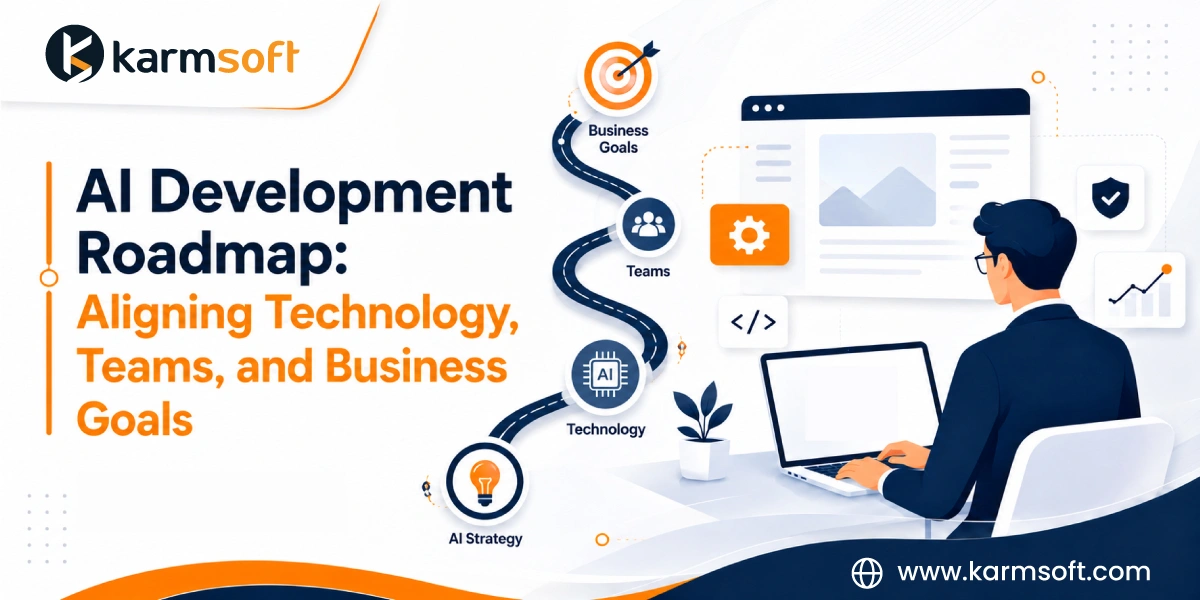
By defining objectives, deadlines, and resource allocation, a strategic roadmap offers a clear path for the successful implementation of AI. It assists companies in setting priorities, monitoring advancement, and guaranteeing harmony with overarching business goals. AI initiatives may become disorganized and fall short of expectations in the absence of a strategy.
The significance of organized AI planning and governance is emphasized by guidelines from institutions such as the OECD. Businesses may successfully use AI while guaranteeing long-term growth and sustainability with the help of a clearly defined roadmap that includes performance indicators, risk management techniques, and ongoing assessment.
Businesses must specify their goals and anticipated results before implementing AI. The AI strategy is shaped in part by determining whether the objective is to increase productivity, boost customer satisfaction, or cut expenses. Businesses like IBM place a strong emphasis on coordinating AI projects with primary business objectives. Better resource allocation, quantifiable success, and targeted implementation are all ensured by well-defined goals. It enables businesses to avoid needless complexity and get significant returns on their AI investments.
To determine where AI can be most useful, businesses should assess their operations. This brief examines data processes, consumer interactions, and workflows to identify automation options. Companies such as Google offer tools to find patterns and insights in data. Businesses can prioritize high-impact projects and ensure effective resource allocation by identifying the appropriate use cases.
For the implementation of the latest AI development trends in 2026, choosing the appropriate AI partner is essential. Companies should seek out partners with solid portfolios, industry knowledge, and demonstrated skills. Businesses such as Accenture provide all-inclusive AI services, from planning to implementation. A trustworthy partner guarantees seamless integration, offers continuous assistance, and assists in navigating technological challenges. Selecting the appropriate partner guarantees long-term success in AI adoption, lowers risks, and speeds up development.
Before expanding, companies can assess viability and identify potential obstacles by beginning with tiny AI projects. Pilot projects are low-risk ways to monitor performance, validate concepts, and improve tactics. To gain confidence and knowledge, companies like Microsoft advise starting with modest use cases. This strategy guarantees improved learning, lowers the initial investment risks, and offers a solid basis for future AI project expansion.
Businesses should progressively scale to increase their capabilities when early AI programs demonstrate success. A staged approach guarantees seamless integration with current systems and helps in efficient resource management. Organizations can manage growing data quantities, enhance system performance, and preserve flexibility through gradual scaling. This approach optimizes the long-term return on AI investments while guaranteeing sustainable growth.
To assess the effectiveness of AI projects, return on investment (ROI) must be measured. Key performance measures, including cost reductions, increased productivity, and revenue growth, should be monitored by businesses. SAP's tools help in tracking and evaluating performance indicators. Frequent review helps pinpoint areas for improvement and guarantees that the AI program produces the desired results. Businesses may optimize their AI initiatives for better outcomes and make data-driven decisions by monitoring ROI.

AI is reshaping every industry at a quick pace. Organizations that proactively adopt these AI development trends 2026from Gen AI to ethical practices will be in a better position to achieve success. The upcoming era belongs to the businesses that treat AI not as a technology but as a strategic partner. In 2026, it’s high time for businesses to experiment with AI development services.
By unleashing the future AI development trends, businesses can make smart decisions. It helps them to succeed in this virtual era. Embed AI into your operations & products in a responsible & scalable way, use the right strategies & talk with the best development partner to see long-term benefits.

About the Author
Kaushik Patel, Software Architect at Karmsoft, is a visionary leader in the IT industry. With expertise in web app development, he ensures Karmsoft delivers user-friendly, high-performing solutions. His commitment to excellence drives business growth for clients worldwide.
 ChatGPT
 Google AI
 Perplexity
 Claude
 Grok
Grok