Summarize this blog post with:
Quick Summary
AI integration is becoming an essential investment for businesses looking to improve efficiency, automate workflows, and enhance customer experiences in 2027. The cost depends on business size, project complexity, technology selection, data readiness, and integration requirements. Basic AI automation may cost a few thousand dollars, while custom AI applications and enterprise-level solutions can require hundreds of thousands or millions. Understanding development, infrastructure, maintenance, and training expenses helps businesses plan their AI investments and achieve better returns.
Table of Contents
As more companies embrace AI, its impact on the way they operate, innovate, and compete is growing. Comprehending the advanced AI development services is crucial for businesses when making investment decisions for technology and digital transformation.
AI has many benefits for businesses, from automating everyday tasks to enhancing communication with customers and improving decision-making. According to McKinsey's 2025 State of AI report, 88% of respondents said their organisations regularly use AI in at least one business function, highlighting its growing importance in business operations. However, AI integration costs depend on factors such as business size, project complexity, data readiness, and integration requirements.
In this guide, you'll learn about the 2027 pricing, primary cost drivers, business use cases, and ancillary costs, to help your business effectively AI Integration budget.
AI integration requires aligning AI technologies with the business systems used, like CRM, ERP, and databases, in order to streamline day-to-day tasks. It facilitates automation of repetitive tasks, streamlines workflows and enhances customer support, analyzes business data to inform quicker choices and more. The integration of AI can help companies operate more efficiently and reduce costs by cutting down on manual tasks, minimizing errors, and boosting productivity.
The overall AI integration development cost is crucial for selecting the appropriate tier to match the budget and business objectives. They can vary from a straightforward API integration with AI services provided in the cloud to more intricate configurations.
Basic projects cost between $5,000 and $20,000. Small enterprises typically use off-the-shelf AI development solutions such as pre-built customer support chatbots, automated basic e-mail, or pre-existing API plug-ins.
The cost of mid-sized integrations typically ranges from $20,000 to $75,000. These projects integrate intelligent automation with the core of the CRM/ERP system, provide customized workflow activation triggers and handle internal company data safely.
The cost of enterprise-grade advanced AI development services can vary from $75,000 to more than $250,000. These services are well suited to large organizations that require integration between multiple departments, high transaction volumes, and stringent security measures.
Purchasing a fully custom AI system designed for a specific industry process can range from $100,000 to $500,000+ dollars. These include optimising open-source models, developing custom data pipelines and developing unique algorithms.
The overall AI Integration price can be broken down into two main parts: setup and customization costs, and cloud hosting, API usage, and model maintenance costs.
Also Read: List of AI Integration Services Companies Should Consider in 2026
The price varies based on the sophistication of AI capabilities and the number of business workflows used. Simple automation is less expensive than an enterprise-wide integration, or even an AI-based model.
For older software, development costs can rise as custom connectors, middleware, and/or database upgrades may be needed to integrate AI.
You can typically find pre-built AI models or commercial APIs at lower upfront costs, but creating custom AI models takes longer, more skill and computational power.
The cost of integrating the business data includes data cleaning, data organizing, data migrating and data secure storage.
API configuration, licensing, and usage fees need to be configured and paid to integrate AI with platforms like CRM systems and ERP along with other platforms.
There are recurring salary costs involved when the developers are in-house, and the price is flexible when they are outsourced. A reliable edge AI development company in India can offer high-quality development solutions at affordable prices.
Implementing encryption, access controls, privacy measures and compliance regulations like GDPR, HIPAA, SOC 2 can drive up costs.
On-going model updates, performance monitoring, infrastructure management, and improvements are part of the long-term costs of integrating AI.
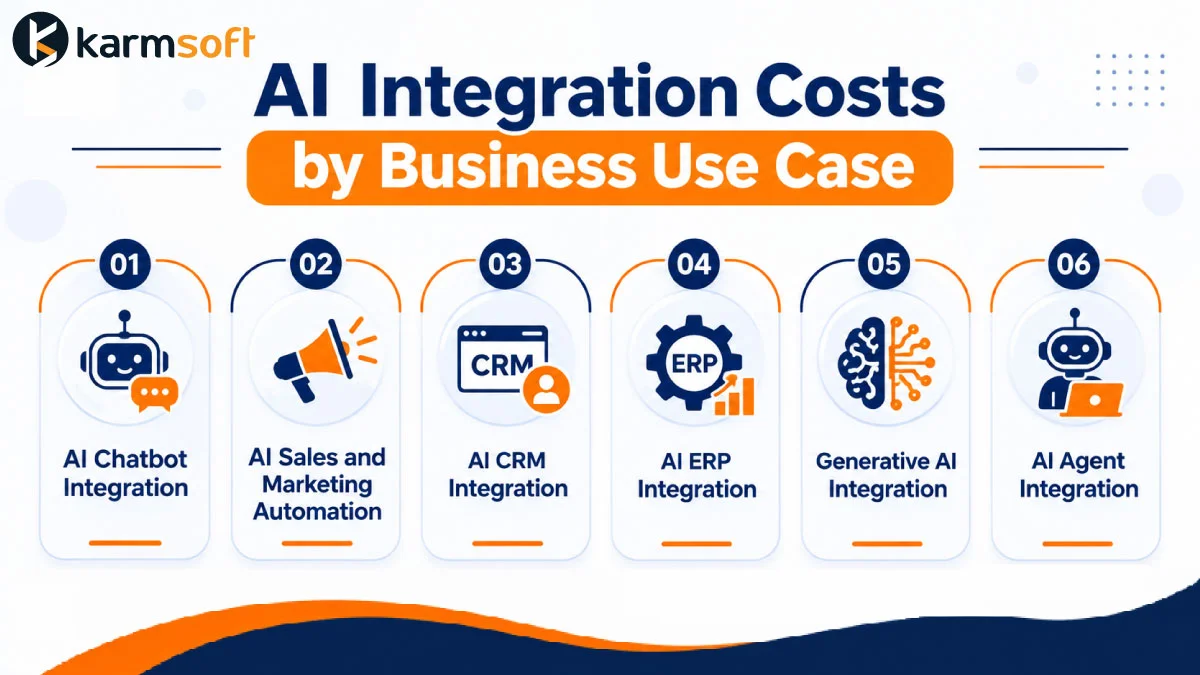
The cost of integrating AI chatbots varies significantly, from $3,000 to $15,000, depending on the complexity of the chatbot and the level of customer support needed. This integration of chatbots with websites and CRM systems can help with timely responses and automatic updating of customer records.
The price of sales and marketing automation is approximately $10,000 to $35,000. AI assists businesses in evaluating leads, creating personalized messaging, forecasting customer behaviour, and optimizing your customer engagement.
The price of AI CRM integration typically ranges from $15,000 to $50,000. It enhances customer data analysis, forecasts customer behavior, and offers intelligent suggestions to a sales team for decision-making.
The cost of AI ERP integration ranges from around $25,000 to $80,000. It is used by businesses to streamline their inventory management, invoicing, demand forecasting, and other resource-heavy processes.
An integration with Generative AI is, in general, $12,000 to $45,000. It enables automated content generation, document generation, and intelligent employee assistants that are capable of searching and summarizing internal content.
AI agent integration can cost between $30,000 and $120,000. These systems enable multi-step processes to be automated, communicate with business applications, update records and execute complex workflows with little human input.
In addition to the initial development cost, businesses need to take into account several other costs. Preparation and migration of data can be 20% - 30% of the budget and edge computing devices might need initial investments in hardware and software provided by edge AI development services. Other costs involve API and token fees, cloud storage, training staff to use the APIs, and security tests. AI maintenance costs, such as monitoring, prompt tuning, and model retraining, also need to be considered, and can represent 15-20% of the annual software maintenance budget.
The cost of integrating AI into small businesses is usually less than $20,000. They concentrate on specific use-cases like customer support and lead generation with low-cost, ready-made AI products and services and monthly pricing.
Medium sized companies typically spend $20,000 – $75,000. They frequently tackle projects that require collaboration across various departments, create bespoke automation processes, and integrate specific AI development solutions.
The integration price of Enterprise AI can range from $100,000 to $500,000 or higher. These projects include everything from complicated infrastructure to legacy system integration, advanced security needs, and immense AI deployments. The cross platform AI integration cost is affected by the complexity of the system, its scalability, and the needs of the business.
Knowing how service providers price their services can help you select the best pricing plan for your objectives:
The fixed price is for a well-defined scope of the project. This is best suited to smaller businesses with specific needs and clear implementation procedures.
Developer and engineering time is charged per hour. This is the best model to use for custom developments that are subject to continual changes throughout construction.
Cloud software and AI services are provided through a regular monthly or annual subscription. It is an upfront cost savings but causes regular operational costs.
You only have to pay for the amount of API calls, number of tokens used, or amount of data processed that you use. Flexible but may be very expensive depending on the amount of use.
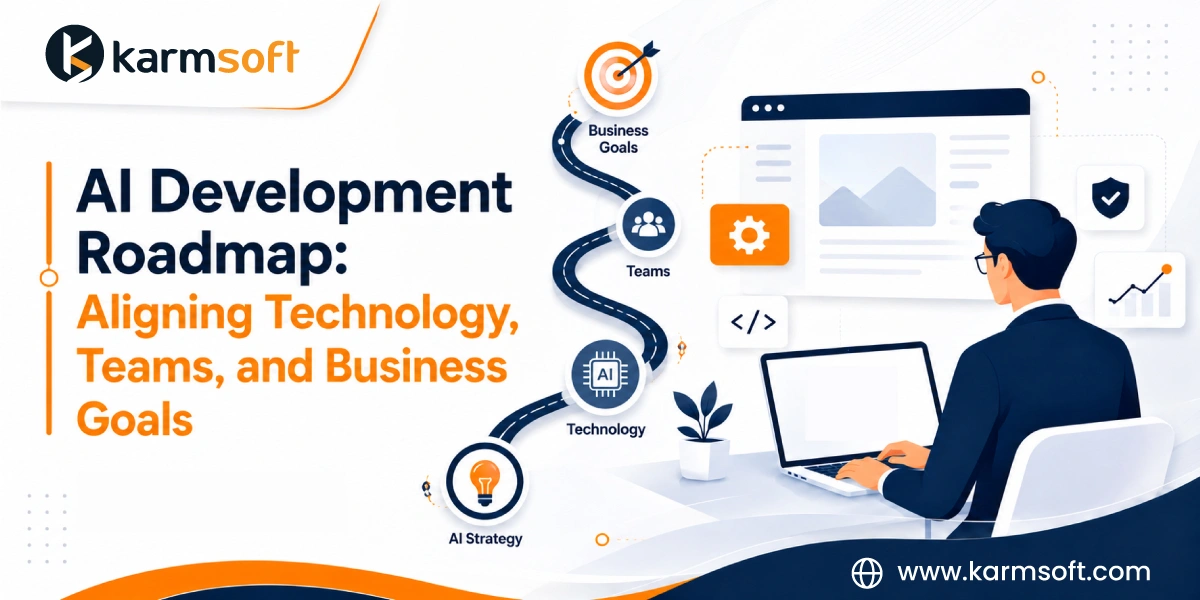
Also Read: AI Development Roadmap: Aligning Technology, Teams, and Business Goals
To manage their AI Integration cost, businesses can focus on high-value use cases, select pre-built AI models, and create key features first. Best practices for data quality, scalable cloud infrastructure and monitoring API costs further help avoid unnecessary spending. Hiring an experienced edge AI development company in India can also cut down on development costs without compromising on quality. With a small project, businesses can test the performance and decide if they want to go ahead with a larger project.
By understanding ROI, companies can determine if their spending on AI Integration is worth the financial return. Begin by evaluating existing operational costs such as labour hours, manual processing time and mistakes. Then, calculate the hours that could be saved by the automation, employee productivity and customer service benefits. Calculate the savings and other benefits of the integration and calculate the total investment cost of the integration and calculate the payback time.
When developing an AI integration, consider your business requirements, project scope, data maturity, and future objectives. Simple integrations can begin at $5,000 and enterprise solutions with advanced AI development services can exceed hundreds of thousands of dollars. When setting up your AI Integration cost breakdown, be sure to factor in the costs of infrastructure and maintenance, as well as development and subscriptions. With an experienced edge AI development company in India, one can get reliable AI development services at a competitive rate with customized AI development solutions.
Key Takeaways

About the Author
Hardik Panchal, CTO, Scrum Master, and Software Architect at Karmsoft, leads the charge in creating innovative web and mobile applications. His technical expertise and commitment to client satisfaction drive Karmsoft’s success. Hardik is passionate about turning ideas into practical digital solutions that help businesses grow.
 AI Development
 ChatGPT
 Google AI
 Perplexity
 Claude
 Grok