Blog Umbraco Development
Top 10 Umbraco CMS Features Decision Makers Must Leverage in 2026
May 25, 2026Rushirajsinh Jhala
BlogUmbraco Development
May 25, 2026Rushirajsinh Jhala

Summarize this blog post with:
In 2026, selecting a CMS will be a pivotal factor in how a business organizes and supports enterprise-level management of its operations across its digital ecosystem. With rapid digital transformation across all sectors, organizations have moved beyond simple content publishing options. They demand systems that provide speed, integration, safety, and sustainable scalability.
As a result, modern tools like Umbraco are proving to be very valuable. Many organizations are implementing Umbraco development services to design tailored and demand-optimized content management systems to achieve their business objectives. It is no longer the case that organizations must adjust their workflow to accommodate inflexible CMS frameworks and approaches. Now, businesses are choosing tools that meet their needs.
As businesses grow online, they increasingly need flexible, scalable content management platforms. According to recent stats, about 42.2% of the sites on the internet are powered by one content management platform. Lots of companies are transitioning to content-focused, digital operations. For this reason, it is increasingly important to choose content management systems that can grow with the business.
Umbraco is well-suited to this environment. It offers the flexibility of open source software with the full capabilities of an enterprise system. Companies can customize the content structure. Companies can manage complicated workflows and integrate with third-party services and products. This is especially valuable for businesses operating across global markets that need to maintain a consistent and unified digital experience for diverse audiences.
The convenience of use and complexity of technology are two major driving forces for demand. Content editors can use a simple publishing interface, while developers can customize and build anything they want. This ultimately lessens the dependency of teams and improves operational efficiency.
For decision makers in 2026, performance and security should both be high on their priority list. Umbraco provides solutions for modern businesses that need to prevent both system shutdowns and data security breaches through its continuous software updates, role-based access controls, and cloud-based deployment system.
Through this blog, decision-makers will gain a clear understanding of the most important Umbraco CMS features to focus on in 2026. The study will demonstrate how these capabilities create business growth opportunities while enhancing digital performance and enabling businesses to achieve long-term scalability. The readers will develop assessment skills to judge Umbraco's suitability for their digital strategy and determine its potential to create efficient content systems for future needs.
Organizations have shifted to using open-source CMS platforms as they become more cost-effective and flexible, promoting greater freedom in managing and controlling digital operations. A significant number of companies have begun using Umbraco development services to create scalable digital ecosystems that enable faster, more frequent custom changes and updates.
Open-source CMS platforms allow businesses to mold their content strategies based on their current business needs and customer demands. Organizations benefit from improved flexibility, easier feature enhancements, and stronger control over digital infrastructure, making modern CMS platforms more practical for long-term business growth strategies.
Enterprises and growing businesses need content management systems that can manage their high-volume content operations while their websites handle increasing visitor traffic, and their digital content needs to grow. Scalable architecture maintains its performance and operational stability while providing users with uninterrupted access to services across multiple websites and applications and various regional content management systems.
Developers use Umbraco to create custom digital solutions through its user-friendly system, which enables them to build complex projects and add new features through third-party software connections. Developers use the platform to create custom workflows that help them streamline operations and develop scalable systems that enable businesses to respond to changing operational needs and market demands.

The Umbraco CMS features package provides content teams with an intuitive back-office interface that enables them to handle all aspects of page and media management together with their publishing processes. The clean dashboard structure improves productivity, reduces operational confusion, and helps non-technical users handle content updates with greater confidence and accuracy.
The drag-and-drop content management system lets editors create web pages and design their layouts with no technical expertise required to operate their system. Teams can organize content sections quickly without coding knowledge, which leads to faster publishing times, better workflow efficiency, and increased collaboration between marketing and content management teams.
Umbraco needs minimal training because its user interface provides operational ease for all users who need to work with the system. Content managers and marketers, plus administrators, can learn to use existing workflows, which decreases their onboarding requirements and boosts their work efficiency, while businesses can sustain their content production work without needing extensive technical support.
Umbraco allows companies to define custom content types and custom content schemas, letting companies configure organized systems in line with their operational requirements and digital strategies. An adept Umbraco CMS development company creates flexible content frameworks for companies, helping with large-scale enterprises organize their websites and digital solutions through organized systems that make management easier and more efficient.
Capabilities for implementing formal and standardized content provide companies with the ability to conserve resources when maintaining uniformity across platforms, websites, and applications. Teams are able to use validated content components and eliminate the need for duplicates, improve the efficiency of content publishing, and enforce governance, all the while making certain that company content is accurate, concise, and in alignment across all of the company’s digital, computing, and communications environments.
The ultimate flexibility of content modeling systems allows businesses to handle their complex operational needs while maintaining their ability to grow and their performance requirements. Organizations that operate multilingual platforms and multiple sites and industry-specific workflows find that adaptable architectural systems help them manage content more effectively while enabling their future business growth and their need for advanced system connections and digital transformation objectives.
Modern businesses depend on various digital systems, which require seamless third-party integration to maintain operational efficiency and ensure data consistency. One of the strongest Umbraco features benefits is its ability to connect smoothly with analytics tools, payment gateways, customer platforms, and enterprise applications without disrupting existing workflows or processes.
Umbraco's API-first framework enables developers to create adaptable digital systems that enable instant data sharing between different platforms. The system design enhances interoperability between systems while making it easier to create custom connections. The system design enables businesses to expand their online operations without harming their existing digital services and future operational needs.
Umbraco establishes effective operations with CRM, ERP, and marketing automation platforms, which enable organizations to unify their data resources and achieve improved operational oversight throughout their various departments. The system enables businesses to automate their workflows while delivering better customer service and generating more precise reports through uninterrupted connections between their core operational systems and their digital workflows.
Headless CMS functionality enables businesses to deliver content through APIs instead of using traditional frontend delivery methods. This method gives developers increased flexibility because organizations can control their content from a single point while distributing it to multiple digital platforms, including websites, mobile applications, and other connected systems.
Content delivery through APIs enables faster publishing workflows and improved consistency across multiple digital touchpoints. The Umbraco development company, with its experienced staff, can build API-based systems that help organizations to manage their content through better scalability and dynamic user experience delivery across web platforms, mobile devices, and new customer interaction methods.
The combination of Omnichannel content distribution with Umbraco enables businesses to create digital experiences that allow customers to engage with their content through different devices and platforms throughout their daily activities. Businesses can maintain consistent messaging, improve engagement quality, and adapt content delivery strategies efficiently while supporting personalized experiences that align with evolving customer expectations and market demands.
The organization needs continuous security updates to safeguard its digital platforms because new cybersecurity threats and system vulnerabilities keep emerging. System enhancements lead to better performance and security protection, which enables organizations to handle sensitive information while they comply with regulations and maintain their essential digital assets.
Administrators can use role-based access control to create permission systems that match employee job functions, thereby enhancing security operations and team workflow management. The system protects against unauthorized access attempts while safeguarding confidential data and permitting only designated users to control particular content sections and execute essential system administration tasks.
Organizations can achieve better cybersecurity defense through protection mechanisms that defend against common vulnerabilities while their websites maintain operational stability and their customers trust their services. The professional Umbraco development consulting service enables businesses to implement advanced security measures, which enhance their infrastructure protection and develop safe digital spaces that ensure uninterrupted business operations and dependable users’ online experiences.
The Umbraco system is designed to operate at high capacity to manage heavy user traffic without compromising website performance, which includes speed, website stability, and user experience quality. Businesses that operate expanding digital platforms from their websites receive advantages through performance capabilities that deliver continuous service even during times of heavy user traffic, content growth, and increased online customer interactions.
Cloud-ready deployment capabilities enable organizations to scale their infrastructure needs according to their operational demands while achieving better system performance and operational flexibility. The business can achieve two goals by minimizing downtime risks and using systems that enable high availability to meet its performance requirements during digital transformations and its future technology development work.
Business growth at the enterprise level needs content management systems that can handle extensive operations, multiple web properties, and additional integration requirements that require simultaneous support. Scalable architecture enables companies to develop their digital ecosystems while sustaining consistent performance and operational stability and delivering uniform user experiences throughout their global customer-facing platforms.
Umbraco enables organizations to manage multilingual content through its platform, which allows users to create and organize multiple language versions of their content. The solution helps organizations to improve their operational processes while reducing content duplication and maintaining uniform messaging throughout their international websites, marketing campaigns, and local customer interaction channels.
Region-specific content delivery helps organizations personalize digital experiences according to geographic preferences, customer expectations, and local market requirements effectively. Businesses use localized messaging and targeted campaigns with culturally appropriate content to create digital experiences that boost customer engagement while building brand trust and expanding conversion opportunities across their worldwide online platforms.
Through its multilingual and localization abilities, the platform enables businesses to operate across different international markets while serving various customer groups. Organizations can maintain centralized content governance while supporting regional flexibility, consistent branding, and efficient communication strategies that align with global operational goals and evolving customer experience expectations.
SEO-friendly URLs provide websites with better search engine visibility because they enable search engines to determine page relevance and website structure more effectively. The website benefits from clean, organized URL formats because they improve user navigation while increasing organic search success and extended visibility in various competitive digital platforms and online business environments.
Metadata management capabilities enable businesses to enhance their search engine performance through the optimization of page titles, descriptions, and structured content information. The system helps organizations sustain unified optimization processes throughout their extensive websites while improving their digital marketing results through enhanced online visibility and better content performance.
Organizations can track user behavior, monitor campaign performance, and evaluate website engagement through their analytics tools, which they can integrate without difficulty. Businesses use precise reporting along with performance metrics to enhance their marketing activities and make better operational choices while they grow their business through data-based improvements to their digital presence.
An active global developer community continuously contributes updates, improvements, and innovative solutions that support evolving digital requirements across industries. Businesses benefit from collaborative expertise and shared technical knowledge, which leads to continuous platform improvements that enhance project development efficiency and operational reliability throughout their entire duration.
The comprehensive documentation system offers developers complete implementation instructions together with technical resources and troubleshooting assistance, which helps them manage complex development tasks. The system helps teams maintain project schedules because it boosts their work efficiency while they develop new features and adhere to standard development practices across all their enterprise digital projects and platform growth initiatives.
The availability of plugins and packages helps organizations extend functionality quickly without rebuilding essential features from the beginning. Businesses can implement their projects more quickly because they use fewer development resources while creating digital systems that can grow to meet future market changes and customer experience evolution.
Businesses can use open-source systems to create platform functions that match their operational needs, technical requirements, and customer expectations. Organizations can continuously optimize workflows, adapt digital experiences, and modify infrastructure efficiently while ensuring the platform remains aligned with evolving business strategies and market changes over time.
Tailored solutions help organizations address unique operational challenges that generic content management systems fail to support because they lack essential requirements. Businesses can build specialized workflows together with personalized digital experiences and industry-specific functionality that will enhance their operational efficiency while creating a unique competitive advantage and supporting their digital transformation and organizational growth goals.
Development teams can use custom code extensibility to create new platform features that will work together with the platform's existing functions while keeping system performance at peak levels. Organizations can integrate specialized technologies through their ability to create operational workflows and develop digital ecosystems that support their future growth, changing needs, and enterprise-level digital innovation strategies.
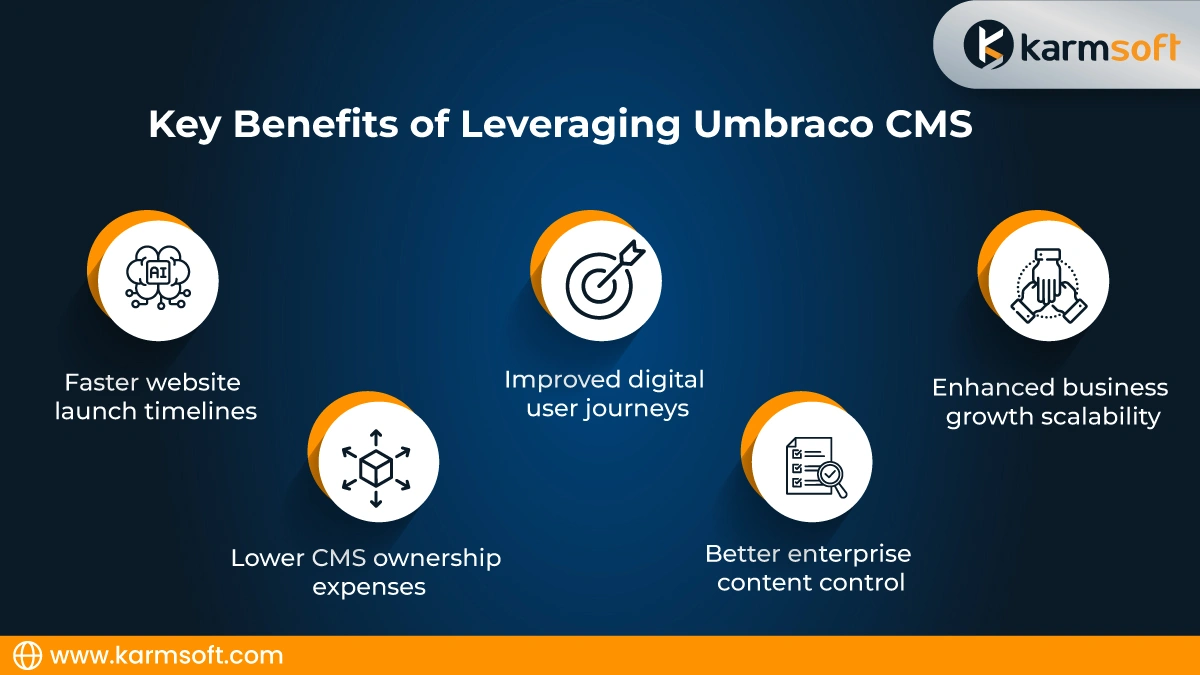
Faster time-to-market is one of the biggest advantages of Umbraco for modern businesses managing dynamic digital operations. The organization can achieve faster website and campaign launches and digital experience launches because its workflows, content structures, and publishing systems enable efficient operations.
Businesses achieve cost savings through open-source CMS platforms because they avoid both costly licensing fees and restrictions that come with vendor lock-in. Organizations use professional Umbraco development consulting to improve their implementation methods while decreasing future maintenance costs and building digital systems that will perform better in both operations and financial results throughout their lifetime.
The enhanced user experience leads to business growth through improved customer interaction, website accessibility, and digital satisfaction across all their platforms and devices. The combination of rapid performance, user-friendly navigation systems, flexible content delivery, and customized user experiences enables businesses to fulfill changing customer demands while building brand trust and developing long-term customer loyalty methods.
The organizations achieve improved digital asset management, publishing workflow control, and user permission administration through enhanced content governance methods. The implementation of structured content management processes enables organizations to reduce content duplication problems while fostering better interdepartmental collaboration and maintaining content accuracy. The business operations enable digital expansion by maintaining their quality standards, compliance requirements, and organizational procedures.
Also read :- Umbraco Consulting Company in Canada for Custom CMS Development
Businesses should first identify clear digital objectives before selecting CMS features that influence long-term operational success. The content strategy must match the platform capabilities to create an effective system that supports publishing operations and maintains brand identity and marketing activities. One of the most valuable Umbraco features is its ability to modify content frameworks according to changing business needs and customer interaction targets.
Organizations can select CMS capabilities that enhance customer experiences and digital interactions after understanding their target audience's needs. Businesses need to assess the different ways users interact with their content and platform access and service use throughout the internet. The organization needs to choose features that enable personalized experiences, deliver content at different times, and create user-friendly navigation systems to achieve better customer engagement, retention, and long-term satisfaction.
Modern businesses need to assess their integration requirements because they operate multiple systems, which include CRM platforms, analytics tools, and marketing automation software. The selected CMS system needs to provide uninterrupted connectivity, which will maintain operational performance. Strong integration capabilities help organizations centralize workflows, improve data consistency, and simplify digital operations across departments and customer-facing platforms effectively.
Scalability expectations require careful assessment because organizations need to verify that their content management system will handle their future growth, increased visitor traffic, and their expanding digital operations. Businesses that operate multiple websites, maintain extensive content libraries, and serve international markets need platforms that can sustain their performance during increasing demand while providing them with long-term operational capabilities and infrastructure development.
When analyzing CMS platforms, maintenance costs are essential as long-term costs affect the return on investment. Companies need to think about things like hosting, ongoing support, security updates, and development post-implementation. Good CMS platforms will reduce admin complexity, minimize the costs that are hard to see upfront, and allow for easier adjustments to complex high-tech systems.
Future upgrades should be considered during CMS selection because platforms need to support ongoing technological developments, evolving customer needs, and changing business requirements. Organizations can achieve flexible system design through scalable Umbraco CMS development, which enables them to implement continuous system enhancements while adding new functions and advanced system connections without interrupting their current online operations.
Also read :- Scaling Your Business with Umbraco Development Services
Not incorporating scalability can lead to significant operational setbacks as your website traffic, content quantity, and overall business needs grow. When digital expansion efforts are not well planned, businesses can suffer from slow performance, increased maintenance difficulty, and reduced adaptability.
When content structure is needlessly complex, content management becomes unnecessarily overseen by editors and administrators who rely on it for daily publishing. Complex workflows, unnecessary hierarchy levels, and inconsistent organization result in a great deal of inefficiency, eradicating digital content management productivity and increasing mistakes and errors.
Neglecting security places websites and business information at risk of being hacked and interrupted by security breaches. This can interrupt daily operations, weaken customer confidence, and negatively affect long-term business stability.
Ineffective training results in poor utilization of CMS capabilities, leading to disjointed and ineffective workflows. Employees may struggle with issues in several areas, such as inefficient processes for publishing, broken systems, poor system management, and organizational problems that all stem from a lack of operational guidance.

Choosing the appropriate content management system needs to be done because it will determine how well the organization can grow its operations, how efficiently it will work, how customers will experience its services, and how its digital presence will expand in the face of growing competition and quick changes in the business world.
Partnering with a reliable Umbraco CMS development company helps businesses implement customized digital solutions that improve their workflows and simplify their content management while supporting their future operational growth.
The Umbraco CMS provides decision-makers with flexible security and adaptable system capabilities together with its ability to scale and deliver strong performance, which matches their requirement for digital platforms that achieve long-term business success.

About the Author
Rushirajsinh Jhala is the Head of Mobile Technology at Karmsoft, specializing in React Native app development. With extensive experience in building high-performance, scalable mobile solutions, he leads the mobile division in crafting seamless cross-platform experiences that align innovation with business goals. Passionate about modern frameworks and user-centric design, Rushiraj continuously explores emerging technologies to deliver impactful digital products.
 ChatGPT
 Google AI
 Perplexity
 Claude
 Grok
Grok